
By Lucky Isibor
In its avowed commitment to transparency, accountability, and good governance in the extractive sector in Nigeria, the Africa Network for Environment and Economic Justice (ANEEJ) has successfully completed a research work on the enablers of “Illicit Financial Flows in the mining sector” and formulated the policy dialogue on “Addressing the Enablers of Illicit Financial Flow.”
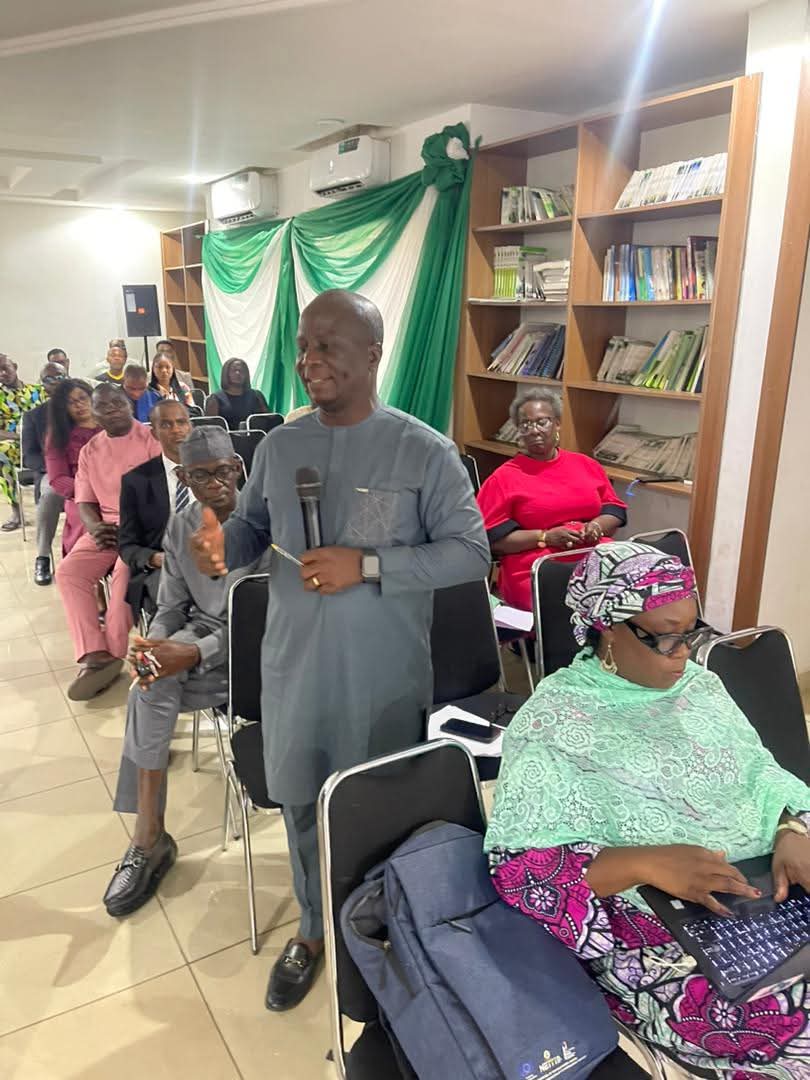
Presenting the report of the research to stakeholders at NEITI House,Abuja, on Wednesday, 4 February, the Executive Director of ANEEJ, Rev. David Ugolor pointed out that Nigeria stands at a critical crossroads as the country makes efforts to diversify its economy away from oil dependence, adding that the solid minerals sector which is a strategic pillar for revenue mobilisation, job creation, industrialization and sustainable development is being threatened by illicit financial flows as a result of illegal mining.
While stating the objectives behind the research which he said will assist in addressing gaps in regulatory challenges, corruption, opaque ownership structures, under pricing of the nation’ssolid mineral resources, smuggling and organised crimines in the solid minerals sector, Ugolor noted that, “Illicit financial flows are not just a technical or financial problem. They represent lost revenue for development, weakened institutions, environmental destruction, and in some cases, direct threats to national security. In mining communities, these flows translate into poverty, insecurity, conflict, and the erosion of trust in government.
“It was against this backdrop that ANEEJ, the Nigeria Extractive Industries Transparency Initiative (NEITI) and the Federal Ministry of Solid Minerals Development, and with the support of the Foreign, Commonwealth and Development Office (FCDO), undertook this study.
“The objective was clear. To identify, analyse, and document the enablers of illicit financial flows across Nigeria’s mining value chain, with a view to generating evidence-based, practical, and actionable policy recommendations.
“The study goes beyond case-based observations and evidence. It draws from fieldwork, stakeholder interviews, institutional data, enforcement records, and international best practices to expose how governance gaps, informality, market distortions, and criminality interact to enable illicit flows in the sector.”
While highlighting three critical messages from the research findings, Ugolor appealed for coordinated approach to tackle the challenges, just as he appreciated the Foreign, Commonwealth and Development Office (FCDO) for its financial and technical support in undertaking the study.
“Allow me to highlight three critical messages from this work:
First, illicit financial flows in the mining sector are systemic, not incidental. They are embedded in weak data systems, fragmented institutional mandates, cash-based transactions, and insufficient oversight from extraction to export.
“Second, artisanal and small-scale mining (ASM) lies at the heart of the challenge. While ASM provides livelihoods for millions, its persistent informality and lack of traceability make it highly vulnerable to exploitation by smugglers, corrupt intermediaries, and armed groups.
“Third, no single institution can address this challenge alone. Tackling IFFs in the mining sector requires coordinated action among regulators, law enforcement agencies, financial institutions, civil society, host communities, and international partners.
“We are here to collectively interrogate the findings, reflect on what is working, confront what is not, and commit to concrete reforms. These include strengthening beneficial ownership transparency, improving production-export reconciliation, enhancing inter-agency data sharing, formalising artisanal and small-scale mining, tightening Anti-money Laundering/Countering Terrorism Financing controls, and ensuring that enforcement actions lead to credible deterrence.
“ANEEJ believes strongly that evidence must inform policy, and policy must translate into action. We also believe that civil society has a critical role to play in supporting government reforms, amplifying citizen voices, and holding all actors accountable.
“We are deeply grateful to the FCDO for its financial and technical support, and for its consistent commitment to addressing illicit finance and strengthening governance in Nigeria.
“I wish to sincerely appreciate NEITI for its leadership and partnership, the Federal Ministry of Solid Minerals Development for its collaboration, and all MDAs that contributed data and insights to this study.”
The Minister of Solid Minerals Development, Dr. Dele Alake in his remarks pointed out that the solid minerals sector holds enormous promise for Nigeria’s economic diversification, job creation, industrialization, and regional development. He noted that the nation’s mineral wealth, if properly governed and managed can serve as a strong pillar for sustainable growth, noting regrettably that the research being presented makes it clear that the sector continues to face serious governance and regulatory vulnerabilities.
“These challenges are not merely technical or administrative concerns. They have direct implications for national revenue and fiscal stability, for security especially within mining communities, for investor confidence in the sector, and for community trust as well as environmental sustainability. When revenues are lost and regulations are weak, communities suffer, the environment is degraded, and the legitimacy of institutions is questioned.
“It is for these reasons that the Federal Government is repositioning the solid minerals sector through stronger governance, tighter regulation, improved institutional coordination, and technology-driven oversight. We are working to strengthen licensing integrity and enhance transparency within the cadastral system so that mineral titles are managed in a credible and accountable manner. Efforts are also underway to formalize artisanal and small-scale mining, recognizing that informality has long contributed to traceability challenges and leakages. At the same time, we are improving production monitoring and mineral traceability systems to ensure that what is extracted, transported, and exported can be properly accounted for. Central to these reforms is deeper inter-agency collaboration involving the Ministry, NEITI, Customs, NFIU, EFCC, revenue authorities, and security agencies, alongside a stronger emphasis on beneficial ownership transparency and compliance with reporting obligations.”
In his remarks, the Executive Secretary, NEITI, Hon.Musa Sarkin Adar commended ANEEJ for conducting the research in collaboration with NEITI and the Federal Ministry of Solid Minerals Development, adding that it has addressed one of the pressing governance challenges facing not only Nigeria’s extractive sector but the entire economy.
According to Hon. Musa who assured ANEEJ of NEITI’s support in enthroning a regime of transparency and accountability in the solid minerals sector, promised to ensure that the regulatory agency translates the outcomes of the dialogue into concrete reforms.
“The African Union estimates that Nigeria accounts for thirty-five percent of all illicit flows from Africa. Ninety-three percent of these illicit flows occur through the extractive industry. To address this problem, we must continue to generate reliable data for policymakers.
This is why I commend your effort and commitment in this project. I want to reassure you of NEITI’s institutional support and partnership to ensure that transparency, accountability, and data-driven reforms remain at the heart of Nigeria’s solid minerals development agenda.”
High point of the two-day dialogue was the presentation of the highlight of the research report – Drivers of IFFs in Nigeria’s Solid Mineral Sector by Dr Raulatu Piwuna from the University of Jos and the presentation of an Award of Recognition to Rev. David Ugolor, honouring his outstanding contributions to the extractive sector and his pioneering role as the first convener of the Publish What You Pay (PWYP) Campaign in Nigeria, now known as the Resource Justice Network.