
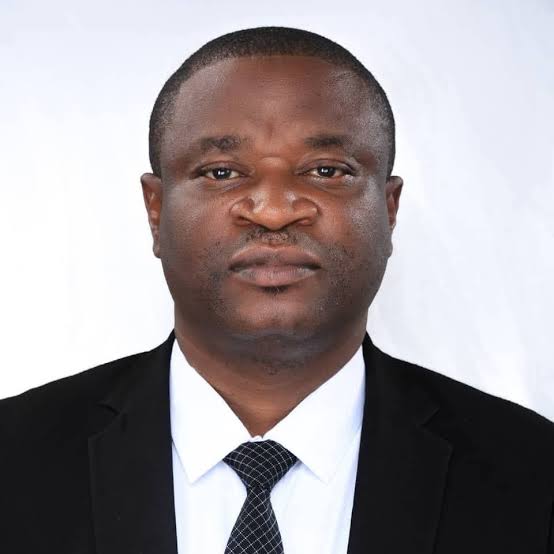
By Osa-Ogbegie, Esq.
There is something profoundly amusing, yet intellectually disturbing, about the spectacle of a former administration seeking refuge in indignation whenever its stewardship is subjected to legitimate public scrutiny.
Crusoe Osagie’s latest intervention on behalf of former Governor Godwin Obaseki, attacking Governor Monday Okpebholo’s second-anniversary disclosures, is a familiar exercise in political escapism. Extravagant in denial, abundant in invective, yet remarkably impoverished in facts.
For eight years, Edo people endured an administration celebrated more for Memoranda of Understanding, consultancy arrangements and elaborate publicity than for enduring physical infrastructure. Today, barely twenty-four months into Okpebholo’s administration, that carefully cultivated mythology is confronting the unforgiving evidence of practical governance.
Let us interrogate the issues.
First, the Museum of West African Art, MOWAA. Osagie dismisses the controversy as though it begins and ends with the alleged closure of a cultural institution.
Really?
The Oshiomhole-led Special Committee reported that approximately ₦3.8 billion of Edo taxpayers’ money, including ₦1 billion released barely five days before Obaseki left office, was committed to the project. The committee raised fundamental questions concerning ownership, financial control and the protection of the interests of the Benin Palace.
What proprietary interest accrued to Edo State? Who authorised the payments? What became of the original Benin Royal Museum initiative? More importantly, how does Osagie’s indignation answer any of these questions?
Cultural sophistication cannot substitute for financial accountability.
Second, Osagie’s astonishing declaration that Obaseki left no outstanding emolument liabilities.
Who, then, were the 714 disengaged workers and retirees of Ekiadolor and Igueben Colleges of Education reportedly owed approximately ₦4.6 billion, towards whose entitlements Okpebholo approved an initial payment of ₦1.16 billion?
At Ambrose Alli University, Ekpoma, monthly subvention reportedly increased from a miserable ₦41 million under Obaseki to ₦500 million under Okpebholo, helping to stabilise an institution previously battered by financial uncertainty.
The distinction between denying a liability and disproving its existence should not be beyond the comprehension of a former governor’s spokesman.
Third, the ludicrous suggestion that Okpebholo has nothing tangible to show for twenty-four months in office.
This is where propaganda encounters its most formidable adversary: physical reality.
In Edo South, the Ramat Park Flyover has been commissioned, while construction progresses on the Adesuwa Junction Flyover. There are interventions along the Temboga–Ekiuwa–UNIBEN Road, Upper Mission Extension, Sapele Road, Old Sapele Road, Ogheghe, Upper Ekehuan/Upper Erhunmwunsee Road, Amufi–Okpagha and adjoining roads, Uteh Palace Road and the Ikpoba Hill corridor, complemented by extensive drainage works. Add the reconstruction of the historic Oba Market, rehabilitation of Oredo Girls Secondary School, the Iguobazuwa General Hospital project and investments in specialised healthcare.
In Edo Central, the Ekpoma–Uromi–Ubiaja corridor, Egbesan–Ikilo Road, Uromi–Agbor, Ukpenu, Ujoelen and Illeh roads, alongside the extensive Uromi–Onewa–Udomi–Ibhiolulo–Afuda–Idumo–Ekho–Uwaya–Ewora network, reflect a deliberate programme of rural connectivity. There are also interventions involving the Amedokhian–Iruele–Awo, Unewa–Ohe–Uzea–Awo and Akho–Agua–Ehanle–Ewu roads. Across Irrua, Uromi, Ubiaja, Igueben and Ekpoma, road construction and drainage improvements complement the Udomi specialist hospital project, nursing infrastructure and renewed financial support for Ambrose Alli University.
In Edo North, the Auchi–Sasaro–Igarra–Ibillo corridor, Ikiran-Oke–Ikakhumoh Road, Ikabigbo–Ekperi Road, Ujemen–Iruekpen–Ozalla–Sabongida-Ora–Afuze Road and Uhunmora–Eme–Afuze Road feature in the administration’s programme of interventions across previously neglected transportation networks. Educational investments, rural infrastructure, healthcare improvements and increased subvention to Edo State University, Iyamho, further demonstrate the breadth of the development agenda.
These interventions are at varying stages of completion, construction and implementation. Their quality, cost and eventual delivery must remain open to scrutiny. Nevertheless, their existence cannot be extinguished by Crusoe Osagie’s rhetorical displeasure.
Permit me to speak from personal knowledge of Uhunmwode, my own local government area.
Under Obaseki, the miserable stretch of road constructed in Ehor, our administrative headquarters, deteriorated prematurely. Yet, for eight years, his administration neglected the critical road connection serving communities around his own ancestral environment.
Today, Okpebholo is constructing the approximately 14-kilometre Eguaholor–Iguomon–Uvbenisi–Oza Road, with a spur to Ohe, linking agrarian communities across Uhunmwode and Orhionmwon.
What manner of political irony is this?
A governor who neglected a critical road serving his ancestral communities for eight years is now being rescued from that infrastructural embarrassment by the very successor his spokesman seeks to ridicule!
Beyond these questions of governance lies another troubling dimension to Obaseki’s post-government political existence. Rather than personally confront the questions surrounding his stewardship, the former governor appears content to leave much of that responsibility to spokesmen and political loyalists. His conspicuous absence from the immediate arena of public accountability raises an uncomfortable question: why should those who defended his administration with such extraordinary zeal continue to fight his political battles while their principal remains largely removed from the scrutiny his stewardship demands?
What become of the social media foot soldiers and Hallelujahboys, political supporters and indefatigable defenders who invest their energies, reputations and political fortunes in his cause? Political loyalty ought to impose reciprocal obligations. There is something profoundly hollow about a leadership culture in which the principal retreats from the battlefield while the preponderance of his followers are left to absorb the political consequences and sustain the propaganda; save for those who really benefited from his government, who have also absconded to the USA, Canada and the UK.
If Obaseki considers his stewardship pristine, he should personally defend it rather than leave his loyalists to carry the burden of explanations he owes Edo people, while he runs from Venice, Italy to Georgia in the US and sometimes to illicit financial havens of the carribeans, according to some people.
I make no pretence that every problem confronting Edo State has been solved. No serious student of governance should make such an absurd claim. Okpebholo must continue to answer questions concerning public finance, security, service delivery and the timely completion of projects. That is the burden of leadership.
Equally, Obaseki cannot escape legitimate scrutiny of his eight-year stewardship by deploying a spokesman to denounce every uncomfortable question as defamation.
Accountability is not persecution. An investigation is not a conviction. Neither is a former governor’s denial a certificate of innocence.
If Osagie is confident that every Naira was properly appropriated, every obligation discharged and every public asset adequately protected, the response is simple: produce the records.
Explain the museum’s ownership arrangements. Reconcile the disputed liabilities. Submit those eight years to transparent examination.
Crusoe Osagie may continue to manufacture outrage, but he cannot manufacture an alternative history.
The era when Edo people were expected to mistake publicity for performance, consultancy for construction and political arrogance for administrative excellence is over.
History will not be written by the loudest spokesman. It will be determined by verifiable records, enduring institutions and tangible improvements in the lives of ordinary citizens.
Edo has moved beyond the government of endless promises. The imperative now is to consolidate a government of measurable results.
DAN Osa-Ogbegie, Esq.
Legal Practitioner, former PDP Publicity Secretary, APC Chieftain and Advocate of Edo Renaissance
Uhunmwode LGA, Edo State
15 November 2026
EDITORIAL DISCLAIMER: The views and opinions expressed in this article are solely those of the author, Dan Osa-Ogbegie, Esq., and do not necessarily represent the views, positions or editorial opinions of Newscurve24. The article is published in the interest of public discourse and accountability on matters of governance. Allegations, assertions and references to individuals or institutions contained herein remain attributable to the author and should not be construed as independently established facts or findings of Newscurve24. Our publication remains committed to fairness, responsible journalism and the right of all persons mentioned to respond to issues raised.