
By Lucky Isibor
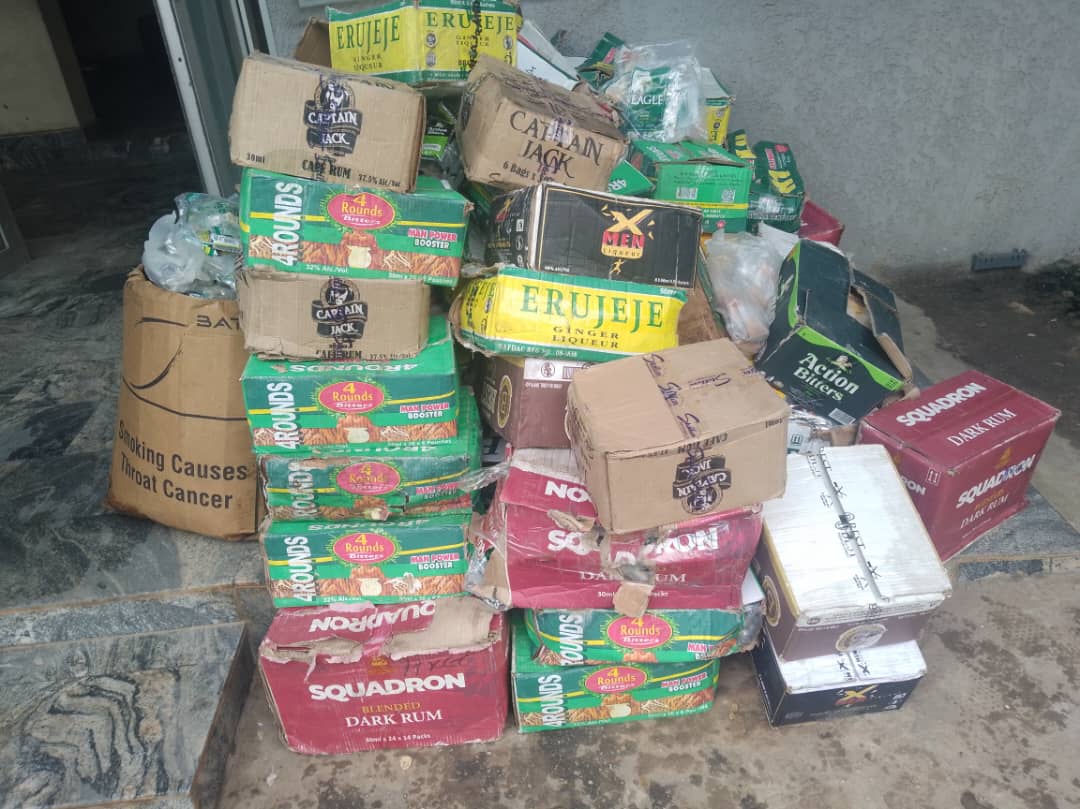
The Edo State Consumer Protection Committee, CPC, on Tuesday raided various markets along Mission Road, Ekiosa and Third East Circular Junction in the Oredo Local Government Area of Edo State.
Leading the committee members was the chairman, Osaro Culture Iyamu, alongside representatives of various security agencies.
It will be recalled that the committee had previously warned that it would commence full enforcement of the ban on sachet gin and locally made Nigerian herbal mixtures, popularly known as Agbo, across the state from Tuesday, September 22, 2026.
The committee said the grace period granted to traders and other stakeholders to comply with the directive expired on Sunday, September 20, paving the way for the commencement of enforcement.
The enforcement exercise was also witnessed by members of civil society organisations in Edo State, who said they were on the field to monitor the exercise and ensure that the rights of traders were respected.
Speaking during the exercise, the chairman of the committee, Osaro Culture Iyamu, warned that anyone found selling, hawking or hoarding sachet gin and Agbo would face sanctions.
“Anyone caught selling, hawking, or hoarding Sachet Gin and Agbo will be made to pay a prescribed fine into the Edo State Government Single Account, while the products will be seized and confiscated,” he stated.
Iyamu said there was some resistance during the enforcement exercise, but that the committee was able to overcome the challenges.
He also disclosed that during the committee’s enforcement at Ekiosa Market, he encountered a man allegedly using Sniper, a chemical insecticide, to mix beans.
According to him, he ordered the arrest of the man, who was subsequently taken into police custody.
On complaints by some traders that manufacturers had refused to accept the sachet drinks they had in their possession, the chairman urged the affected traders to formally write to the committee.
He assured them that the committee would interface with the manufacturers with a view to finding a solution to the issue and facilitating the return of genuine products where applicable.
Iyamu further assured that enforcement of the ban on sachet alcohol would continue until all remaining products were removed from markets and the streets.
Also speaking during the exercise, Comrade Annie Umoru, Executive Director of the Initiative for Gender Equality and Advancement, said civil society organisations accompanied the committee to monitor the exercise and ensure that due process was followed.
“Today we were on the field with the CPC Committee to make sure that no human rights was violated and to make sure due process was followed,” Umoru said.
She explained that the committee had earlier engaged sellers and distributors of sachet alcoholic drinks and informed them of the ban, giving them time to comply.
“Before now, the committee had reached out to the sellers and distributors of these sachets of drinks, and they have been told that this has been banned since January and they should do the needful. Either return it back to the company or do away with it,” she said.
According to her, the enforcement exercise followed the expiration of the deadline given to the traders.
“And so that’s the due process that the committee had followed, and we had also followed them today for enforcement to be sure or to make sure that no human rights was violated even when they had to confiscate those things,” she added.
Umoru commended the committee for the exercise, saying that some of the sachet alcoholic products seized during the operation were found to be fake after their identifying numbers were checked.
“I’d like to commend the committee. It was a beautiful outing. Considering the fact that a lot of the sachet consumables that were picked today have been clarified to be fake. The numbers on it were all checked and they saw that they were fake,” she said.
She expressed concern over the possible health implications of fake alcoholic products, particularly among young people.
“Imagine what people have been drinking, what the young people have been drinking. For us in the civil society space, we understand what the level of this has done to young people and the dangers to young people,” Umoru said.
She appealed to residents to support the enforcement exercise and report potentially dangerous practices to the appropriate authorities.
“Please Nigerians, when you see that someone is mixing something like Sniper in a food like beans, please report it to the CPC to take action. Because it does not happen to you today, it will happen to someone close to you,” she said.
The enforcement exercise also raised concerns over the source and safety of some sachet alcoholic products found in the markets.
Investigations during the exercise indicated that some of the sachet alcohol products in circulation were allegedly being produced by traders rather than reputable manufacturers, making it difficult for the traders to return the products to established manufacturers.
The investigation further indicated that some of the allegedly locally produced sachet alcoholic drinks contained unrefined methanol mixed with water and packaged for sale. Such products, if contaminated with unsafe levels of methanol, can pose serious health risks, including damage to vital organs.
The committee said the enforcement would continue across Edo State as part of efforts to ensure compliance with the ban and protect consumers from potentially harmful products.