
By Lucky Isibor
A coalition of Civil Society Organisations (CSOs), led by the Inosezilo Family Foundation (IFF) has called on the Edo State government to incorporate mental health into the state’s primary healthcare programme, pointing out that untreated mental health conditions results in significant economic losses.
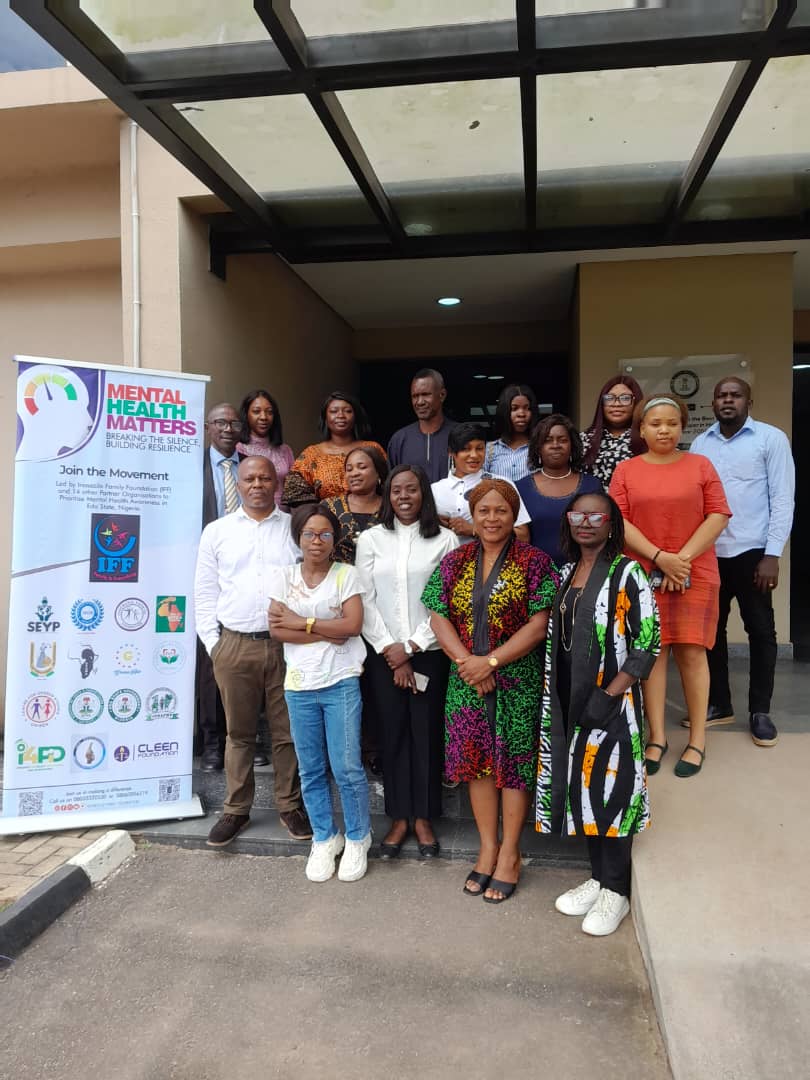
The Executive Director of IFF, Abraham Obode made the call Thursday, 10 October in Benin City while presenting the coalition’s findings on Mental Health Survey Report for Edo State it conducted. The coalition also called on the Edo State government to develop a comprehensive mental health policy for the state and the provision of mental health screening tools at the primary healthcare centres.
Emphasising on the survey findings, Obode noted that the prioritisation of mental is key to a healthy Edo State.
“Prioritization of Mental Health in Primary Healthcare: The Edo State Government should develop a comprehensive mental health policy that integrates mental health services into primary healthcare. This includes equipping healthcare workers with mental health screening tools and ensuring that referral pathways to specialized care are available.
“Public-Private Partnerships (PPP): The report recommends leveraging public-private partnerships (PPP) to address the gaps in mental health care. The private sector, as a major employer in the state, should be encouraged to set up wellness units within organizations, providing mental health support for employees. This collaboration between the public sector, private enterprises, and civil society can reduce the burden on government resources, increase service delivery, and ensure the mental well-being of the workforce, particularly in both formal and informal sectors.
“Public Awareness Campaigns: The report calls for the launch of targeted public awareness campaigns aimed at reducing stigma and encouraging help-seeking behavior. These campaigns should utilize trusted community structures in rural areas, such as religious institutions and local influencers, while leveraging radio, television, and social media in urban areas.
“Capacity Building for Mental Health Professionals: Donor agencies and government partners should invest in training and capacity building to increase the number of mental health professionals, especially in rural areas. The report stresses the need for traumainformed care, particularly for survivors of Sexual and Gender-Based Violence (SGBV) and CEFM.
“Integration of Mental Health into GBV Interventions: Mental health should be a core component of all interventions targeting SGBV and CEFM survivors. This ensures that trauma-informed care is provided, offering a holistic approach to recovery. Monitoring and Evaluation: The report calls for the establishment of a mental health data dashboard to track patient outcomes, service delivery, and gaps in care. This will facilitate the monitoring and evaluation of mental health programs, ensuring continuous improvement”.
While harping on the imperatives of investing in workplace mental health interventions, Obode pointed out that such investment is not only beneficial to employees’ well-being, but also economically advantageous to employers of labour.
“Investing in workplace mental health interventions is not only beneficial for employee wellbeing but also economically advantageous for employers.
“By addressing mental health proactively, organizations can: Increase Productivity: Healthy employees are more engaged and efficient. Reduce Costs: Lower absenteeism and presenteeism reduce financial losses.
“Enhance Reputation: A reputation as a supportive employer attracts top talent. Contribute to Economic Growth: Improved workplace mental health supports broader economic development in Edo State. Reduce stigmatization, Post Traumatic Stress Disorder (PTSD) and trauma .Promote team spirit, collaboration and general well-being”.
In a remark, the Director of the Centre for Gender Studies, University of Benin, Prof. Adefunke Adekunle pointed out that sound mental health will lead to increased productivity, robust family life adding that all will lead to a better society.
According to Adekunle who spoke through Mrs. Ehisumwen Eriamiator, “Mental health is crucial because we need to be in a good state of health to be able to achieve goals and be able to achieve anything you want to do in life. So, the survey is aimed at ensuring that the mental health and well-being of every Edo citizen is properly cared for, so that at the end of the day the state government will see the need to implement this policy.
“When this policy is put in place and implemented, it will lead to high productivity, because when a person is mentally sound he will be able to deliver at work, will be able to raise better family and the society will be better off for it”.
Members of the coalition of CSOs present at the presentation made their imput which the leader, Obode assured will be imputed into the final recommendations.
The Mental Health Survey Report for Edo State which was carried out by IFF in collaboration with a coalition of CSOs, a Consultant Psychiatrist from Irrua Specialist Teaching Hospital; University of Benin Teaching Hospital and the Centre for Gender Studies, University of Benin is the first step by the coalition towards the formulation of a mental health policy for Edo State.
There were brainstorming sessions by those present on strategies to adopt to convince the Edo State government to adopt and implement the mental health policy for the state when it is eventually developed.