
By Lucky Isibor
Civil Society Organisations CSOs in Edo State and other stakeholders under the aegis of Nigeria Civil Society Situation Room in partnership with the Josemaria Escriva Foundation (JOSEF) have tasked Local Government Councils in the state on accountability, proactive disclosure of budget, income and expenditures and service delivery at the grassroots.
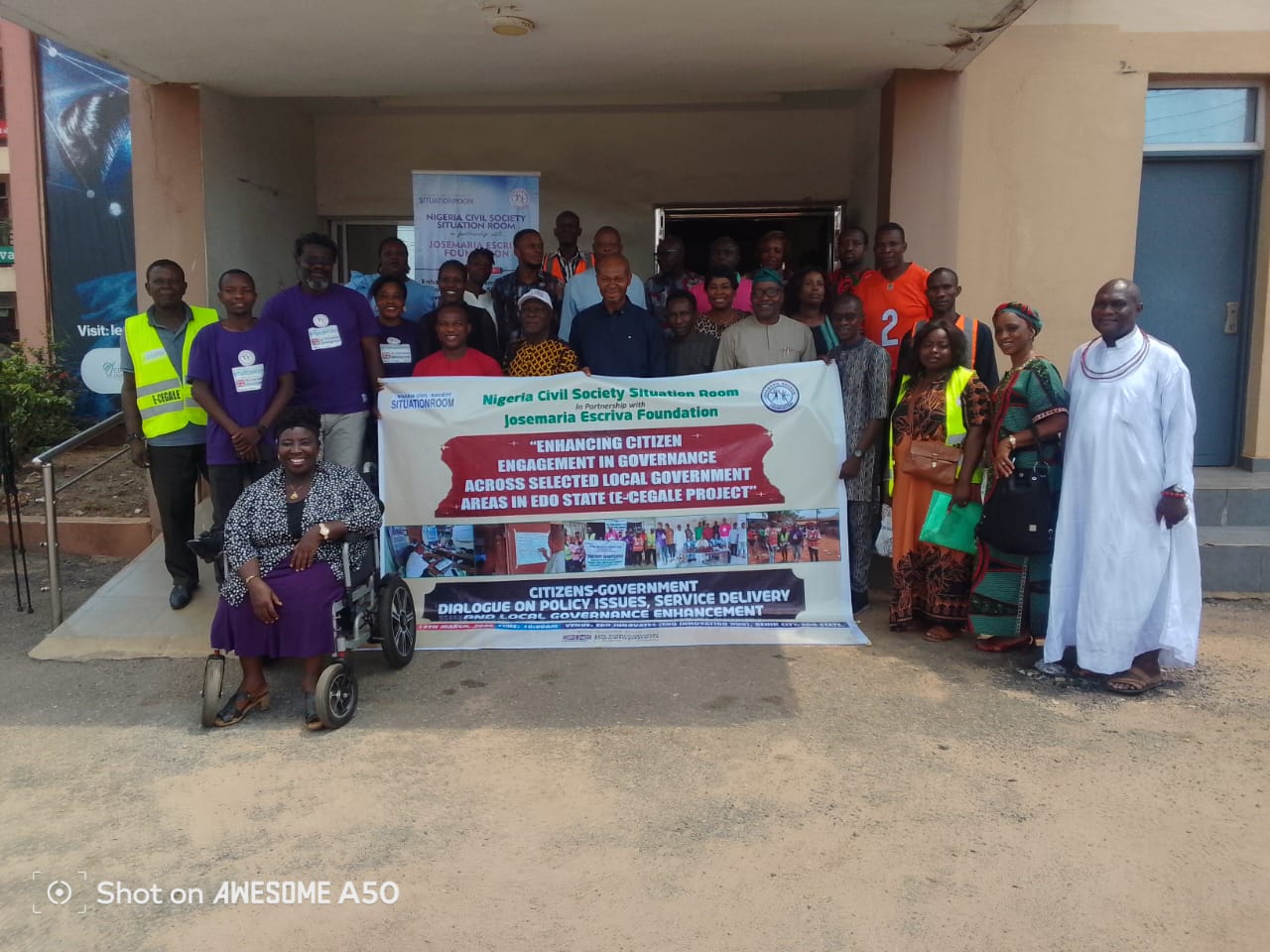
The stakeholders gave the charge at the end of a “Citizens – Government Engagement Forum on Policy Issues, Service Delivery and Local Government Enhancement Under The Enhancing Citizen Engagement in Local Governance Areas in Edo State (E-CEGALE) Project.
The forum organised with the objective of strengthening dialogue between citizens and government actors, enhance accountability in public service delivery, and promote participatory governance at the local government level, was held on 19th March in Benin City and brought together key stakeholders, including government representatives, civil society organisations, community leaders, traditional institutions, women, youth groups and persons with disabilities, and the media from selected Local Government Areas in the state.
After extensive deliberations on citizen participation in policy formulation, budgetary process, causing publications of the budget, transparency and accountability mechanisms in local governance, improving service delivery outcomes at the grassroots, strengthening feedback and grievance redress systems, inclusive governance to ensure participation of women, youth, and marginalized groups and role of civil society and media in promoting accountability, the forum underscored the importance of sustained collaboration between citizens and government in achieving responsive, inclusive, and accountable governance.
The forum observed that there are, “Limited structured platforms for sustained citizen-government engagement at the local level, gaps in transparency and accountability in local government administration, weak citizen awareness of their rights and responsibilities in governance processes, inadequate service delivery across key sectors such as health, education, and infrastructure, marginalization of women, youth, and vulnerable groups in governance processes.”
While emphasising the need need for improved coordination between local government authorities and community stakeholders the forum made far reaching suggestions to the local government authorities, state government and donor agencies and development partners.
“To State Government, provide oversight and support to ensure accountability at the local government level.
Strengthen policy frameworks that promote participatory governance.
“To Civil Society Organizations, expand grassroots sensitization and civic education initiatives, track government commitments and promote evidence-based advocacy.
“To Development Partners, continue to support initiatives that enhance citizen engagement and governance reforms and invest in capacity building for both citizens and government actors.”
Welcoming participants to forum earlier, the Team Lead of the E-CEGALE project and Chief Responsibility Officer of Josemaria Escriva Foundation, Dr. Jude Obasanmi noted that there’s trust deficit between the grassroots and the state, pointing out that While Edo State has successfully digitalized its central operations, these reforms have stalled at the local tier, creating an accountability vacuum”; adding that “The E-CEGALE Project is a strategic intervention to bridge this gap.”
In his reparts, Peter Nwadishi, one the CSO Partners in the
Situation Room pointed out that the forum is looking at the issue of transparency and accountability at the grassroots with view to determining how communities at that level can work the Local Government Councils.
“Today we are looking at stakeholders, looking at the issue of transparency and accountability in governance with emphasis on the grassroots. We are also looking at how the grassroot community representatives can work closely with local government authorities and other government agencies. With the robust representation of various stakeholders in this meeting, we’re trying to see how we can also present a policy brief that will can also look into and be adopted by the House of Assembly to see that the local government budget is being put out for public scrutiny and also see how communities can contribute in the budget preparation and when they come with their community needs so that they can be captured in the budget during budget preparation.
“There is a systemic low fiscal tranpareney and citizen engagement at the LGA level, Public funds are managed behind closed doors, and development priorities are often disconnected from actual community needs.
“The issue stems from a lack of standardized reporting tools, high technical barriers to budget literacy, and the absence of a legal mandate for them to Open their books to the public.
“The primary victims are the youth, women PWDs who rely on local services like primary health and education.
“A lack of transparency benefits corrupt actors and political middiemen who thrive on ghost projects and the diversion of public funds away from community devélopment.”
In a goodwill message, Chief Daniel Obakonzuwa of the Ekaewe Palace Society, thanked members of CSOs for their efforts to bridge the gap between the people and the government.
“I want to thank members of CSOs for bridging the gap between the people and the government, making the government work, making the people aware of government activities, especially at the local government level.
Am happy LG officials are here and now know the lapses in the area of LG budget. The provision of suggestion boxes to some LGAs will definitely bridge the gap between the people and the government at the grassroots.”
Mrs Roda Fred Imienitaman from Esan South-East also harped on how the E-CEGALE Project is bridging the gap between the people and authorities at the local government areas.
“This project is all about bridging the gap between the citizens and the government, in other words, bringing the people closer to the government so that they’ll be able to know what is at the local government level. We have started from the local government and we may take it further. The people have received the project with open hands.”
Also speaking, Ann Ojugo, the Chairmanship of Persons Living With Physical Disabilities JONAPWD thanked the organisers of the forum for their efforts to carry people living with disabilities and other maginalised groups along in the project and all their advocacy engagements.