
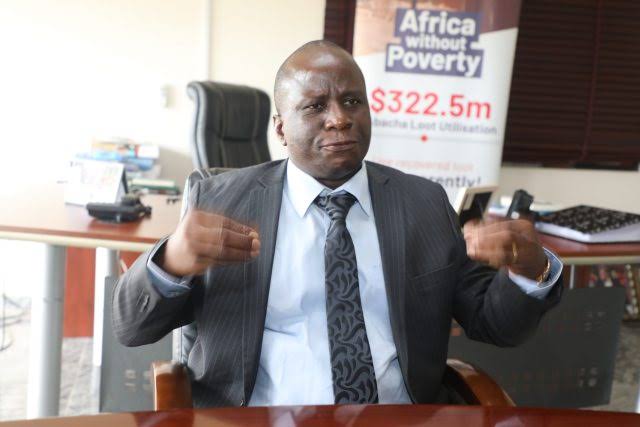
The Common Good Letter, a public-interest advocacy platform led by Rev. David Ugolor, has demanded comprehensive disclosure by the Federal Government over its emergency intervention on the Benin-Asaba Road, warning that the deployment of public resources to rescue the strategic highway must not obscure questions surrounding the failure of its concession.
The group welcomed President Bola Ahmed Tinubu’s authorisation for the Federal Ministry of Works to deploy more than 50 pieces of equipment for emergency intervention on the road, describing the move as necessary relief for motorists, transporters, businesses and communities that have endured prolonged hardship.
But it said the emergency operation should be treated as “a rescue operation, not yet a resolution of the underlying concession failure.”
According to the group, the intervention itself demonstrates that the concession arrangement has failed to deliver the expected results.
The Common Good Letter said the Benin-Asaba road corridor was concessioned to the Benin-Asaba Expressway Concession Company under a 25-year public-private partnership, under which the concessionaire was expected to mobilise private financing, reconstruct the highway and recover its investment during the concession period.
It said disclosures by the Works Minister, Senator David Umahi, had raised fundamental questions about the concession and the government’s handling of the project.
Among the disclosures attributed to the minister were that the concessionaire rejected the government’s proposed intervention options; the government was contractually required to seek the concessionaire’s permission before intervening; asphalt had been removed from some sections of the road, exposing the road base; equipment deployed by the concessionaire had been substantially reduced; the Federal Government would bear the immediate cost of the emergency intervention; and the entire highway would be redesigned with reinforced concrete pavement.
The Common Good Letter said these circumstances made accountability unavoidable.
“These disclosures raise fundamental questions about how the concessionaire was selected, whether it possessed the required technical and financial capacity, what safeguards were included in the agreement and how the project was supervised. A rescue operation cannot replace an accountability process. The emergency intervention may make the road passable, but it does not explain how a major federal highway concession reached this point.”
What the group wants government to disclose
The group specifically called for the Federal Government to disclose eight key details about the emergency intervention.
It wants government to disclose:“The cost and duration of the emergency intervention. The companies supplying equipment and carrying out works on each of the three sections. The legal and procurement authority under which equipment and contractors were engaged. The applicable rates for equipment hire, materials, labour and supervision. The road sections, quantities and specifications covered by the intervention. The source of funding and whether the expenditure was appropriated. The quality-control, traffic-management and completion arrangements and whether the cost will be recovered from the concessionaire, its performance bond, insurers or guarantors.”
The group said the disclosure was necessary because the intervention involves public expenditure, even if government does not regard the operation as the award of a new contract.
It noted the minister’s clarification that no new contract had been awarded to Hitech or another company, but argued that this did not remove the requirement for procurement transparency.
“Equipment hire and emergency works still involve public expenditure and must be documented, competitively priced where possible, audited and publicly reported.”
Beyond the eight immediate disclosures, the group wants the government and the Infrastructure Concession Regulatory Commission to publish the relevant provisions of the concession agreement and explain how its emergency-intervention provisions were formulated.
It specifically wants government to disclose “who drafted and approved those provisions; what government step-in rights were included; what constituted concessionaire default; what performance guarantees were required; what penalties applied to delayed delivery; whether termination rights were adequately protected; and why the agreement apparently prevented timely emergency intervention.”
The organisation questioned how a public-private partnership involving a major federal highway could apparently require government to obtain the concessionaire’s permission before taking emergency action.
“A properly structured public-private partnership should contain emergency-intervention and government step-in provisions to protect public safety and essential services. It should not leave citizens trapped on a deteriorating public highway while government waits for a private company’s consent.”
The group argued that if the concession agreement failed to adequately protect the public interest, the institutional and procurement failures responsible should be identified and corrected.
The Common Good Letter also wants government to open the concession award process to public scrutiny.
It said publicly available information suggested that the principal consortium members had experience in investment management and financial structuring, but that there was insufficient publicly disclosed evidence that they had previously financed, constructed, operated and maintained a highway comparable to the 125-kilometre Benin-Asaba corridor.
It therefore wants the government to publish “the concessionaire’s technical bid; the comparable projects used to qualify the consortium, the identity and experience of the original engineering, procurement and construction contractor; the operations and maintenance contractor; the consortium agreement and responsibilities of each member; evidence of financial close; committed equity and debt financing; the performance bond, bank guarantees and insurance; the construction programme; and reports of the Independent Engineer.”
The organisation said the public should know which entity provided the highway-construction expertise relied upon when the concession was awarded.
Concrete redesign must be justified
The proposed redesign of the road with reinforced concrete pavement is another area where the Common Good Letter wants detailed disclosure.
While acknowledging that concrete could offer greater durability on a heavily trafficked corridor, it said the decision should be backed by engineering, environmental and financial evidence.
The group wants government to disclose “the pavement-condition assessment; traffic and axle-load studies; drainage and flood-control design; comparative lifecycle costs of asphalt and concrete; the revised project cost; the new construction timetable; the effect of the redesign on the existing concession; and who will finance, construct, operate and maintain the redesigned highway.
“A redesign of this magnitude should not become an open-ended variation of a failed arrangement.”
In addition to the disclosures relating specifically to the emergency intervention, the Common Good Letter issued a 10-point immediate demand directed at the government.
“Publish the signed concession agreement, Full Business Case and subsequent amendments. Disclose the beneficial owners, shareholders and consortium members behind the concessionaire. Publish the technical and financial qualifications upon which the concession was awarded.
Commission an independent technical, procurement and value-for-money audit. Preserve evidence and determine responsibility for asphalt removal and other negative work.”
Publish the emergency intervention’s budget, contractors, equipment-hire rates, specifications and timetable. Establish a transparent mechanism for recovering public expenditure attributable to concessionaire default. Publish the revised engineering design and lifecycle-cost justification for concrete pavement. Release monthly physical and financial progress reports verified by an independent engineer and establish a stakeholder monitoring platform involving professional bodies, transport unions, affected communities, civil society and the media.”
Government urged to resolve concession
The group said the emergency intervention has created a potentially difficult situation because the Federal Government is spending public money on infrastructure that remains legally concessioned to a private company.
It wants the government to state clearly whether it intends to enforce the existing agreement, restructure it with stronger safeguards, negotiate a mutual termination, invoke default or step-in provisions, commence arbitration, or conduct a transparent procurement process for a replacement concessionaire or contractor.
It further demanded that any renegotiation be backed by an updated business case, independent valuation, bank guarantees, insurance coverage, measurable milestones and full disclosure of the concessionaire’s beneficial owners and financial commitments.
The Common Good Letter warned against a situation in which public emergency spending increases the value of the project while the original concessionaire continues to enjoy commercial benefits without bearing corresponding costs.
“The government must avoid a situation where emergency expenditure improves the project’s value while the original concessionaire retains the commercial benefits without bearing the corresponding costs.
“The Federal Government must not use public funds to repair damage or complete obligations assigned to a private concessionaire without first determining responsibility and establishing a lawful cost-recovery mechanism. Otherwise, Nigerians may pay twice: first through the concession arrangement and again through emergency public expenditure.
“The government was right to intervene. No concession agreement should prevent the state from protecting lives, restoring mobility and safeguarding the economy. But emergency action must not become an excuse to bypass procurement rules, conceal the history of the concession or transfer private-sector failure to the Nigerian taxpayer.
“The road must be rescued, but the truth must also be rescued. The Benin-Asaba Road must become a lesson in accountability, not another abandoned chapter in Nigeria’s infrastructure history.”