
By Lucky Isibor
The Edo State Commissioner for Women Affairs and Social Development, Eugenia Abdallah, has called on journalists and media practitioners to embrace conflict-sensitive reporting and use their platforms to promote peace, unity and social inclusion in society.
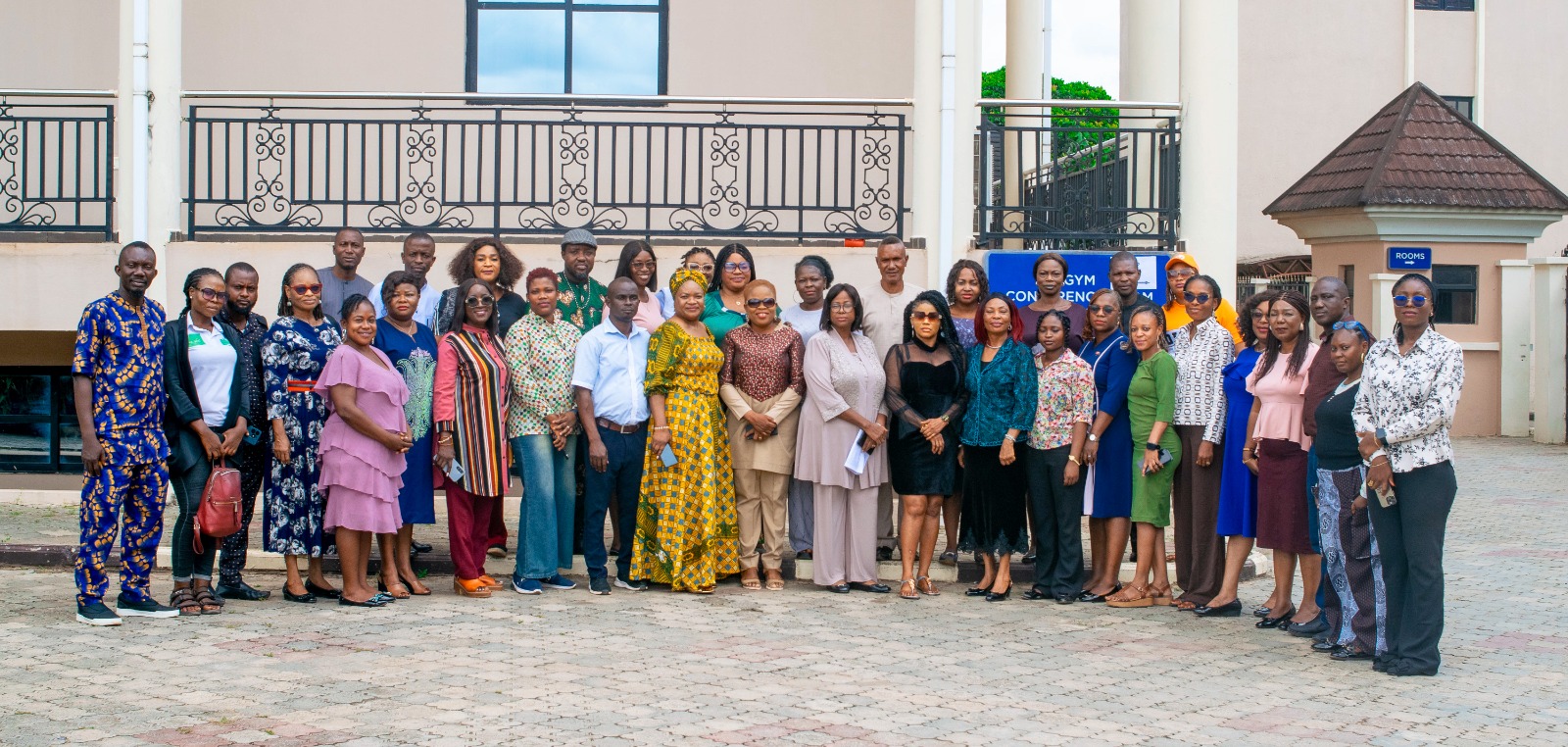
The Commissioner, who was represented by the Director of Media in the ministry, Daisy Osunde, made the call at the opening of a two-day training workshop for journalists and media practitioners on Women, Peace and Security, Youth, Peace and Security, and Conflict-Sensitive Reporting which opened in Benin City, Edo State on Wednesday, 13 May.
She said the media remained one of the most powerful instruments for social change, stressing that the role of journalists in shaping public opinion and strengthening peacebuilding efforts could not be overstated.
“I commend the commitment of journalists and media professionals who continue to play critical roles in shaping public opinion, promoting social cohesion, and strengthening peacebuilding efforts within our communities,” she said.
According to her, “Today’s gathering is very significant because the media remains one of the most powerful instruments for social change. The stories you tell, the language you use, the headlines you frame, and the images you publish all have the capacity either to promote peace or deepen tensions within society.
“As media practitioners, you are not merely reporters of events; you are agenda setters, educators, watchdogs, and partners in development.”
The Commissioner noted that the themes of the workshop were interconnected and central to sustainable development and nation-building.
“The themes of this workshop — Women, Peace and Security; Youth, Peace and Security; and Conflict-Sensitive Reporting — are interconnected and central to sustainable development and nation-building,” she stated.
While emphasising the critical roles women and youths play in peacebuilding and community development, the Commissioner warned against sensationalism, misinformation and inflammatory reporting, noting that such practices could aggravate social tensions and violence.
“Women and young people are often among the most affected during conflicts and crises, yet they are also among the strongest agents of peace, reconciliation, and community resilience.
“Across our communities in Edo State and Nigeria at large, women continue to serve as mediators, caregivers, mobilisers, and advocates for justice and stability. Likewise, our youths possess enormous energy, creativity, and leadership potential that must be channelled positively towards peacebuilding and community development,” she added.
“Unfortunately, negative narratives, misinformation, sensationalism, and inflammatory reporting can aggravate social tensions, ethnic divisions, gender discrimination, and violence. This is why conflict-sensitive reporting has become increasingly important in our society today.
“Conflict-sensitive journalism encourages accuracy, fairness, balance, empathy, and responsibility in reporting. It reminds us that while the media must hold institutions accountable, it must also avoid narratives capable of escalating fear, hatred, violence, or stigmatization of vulnerable groups,” she said.
She reiterated the ministry’s commitment to working with the media in advancing gender inclusion, child protection, social justice and peacebuilding.
“The Ministry of Women Affairs and Social Development strongly believes that the media is a strategic partner in advancing gender inclusion, child protection, social justice, peacebuilding, and human development,” she stated.
She urged journalists to promote balanced reporting on women and youths, advocate against gender-based violence, embrace ethical journalism and support narratives that encourage peaceful coexistence.
“Peacebuilding is everyone’s responsibility. Government alone cannot achieve sustainable peace without collaboration from critical stakeholders such as the media, civil society organisations, traditional institutions, religious leaders, women groups, and youth organisations,” she added.
Earlier, the National Network Coordinator of West Africa Network for Peacebuilding, Bridget Osakue, said the organisation was committed to promoting peacebuilding and conflict prevention across West Africa through various thematic programmes.
“WANEP is West Africa Network for Peace Building and like the name, West Africa. We have offices in each country of West Africa. And we are a network of academia, civil society, and practitioners of peace building,” she said.
Osakue explained that the workshop was organised under the organisation’s Women, Peace and Security programme, which focuses on strengthening the role of women in peacebuilding.
“The one that brought us here today is Women, Peace and Security. That one is a network of women, we call it the women in peace building. It has its own gamut of programs, different strengths,” she said.
She added that WANEP also runs programmes on democracy and good governance aimed at monitoring electoral violence and promoting inclusion.
“We have the Democracy and Good Governance that looks at inclusion and the issues of violence during electoral processes, not just during the elections. Because most times, elections are won before the election day.
“What we do is to monitor the issues of electoral violence, those intimidations, those violence that happen during the course of elections,” she stated.
Osakue further disclosed that the organisation’s Active Non-violence and Peace Education initiative targets young people in schools and vulnerable out-of-school children.
“We used to have it only in primary and secondary schools, but we have added tertiary institutions because of cultism, and then out of school and street children, who are often used because of their vulnerability,” she said.
Speaking on WANEP’s early warning system, Osakue described it as the organisation’s flagship project for monitoring conflict situations across Nigeria and the West African region.
“Our flagship project is Early Warning and Human Security. What we do is to monitor issues of conflict around Nigeria.
“We have monitors across Nigeria and they report on a per minute per second basis and as they are reporting, because we have Memorandum of Understanding with ECOWAS and African Union, we are reporting to these bodies which translates to policy,” she explained.
She added that reports generated through the monitoring system help in policy influence and quick response to emerging security threats.
“What we do is to do a situation analysis and begin to analyze what is happening for policy influence and then quick response,” she said.
In goodwill message, the Coordinator of the Office of the First Lady of Edo State, Anani Okpebholo pointed out that the conversations around peace, security, responsible reporting, and the role that women and young people play in society is compelling, especially in the times that we live in today.
According to Anani who was represented by Amen Ajayi, “In an era where almost every single human with a smartphone and access to social media and gloves of Gen Z’s and Alpha’s going viral within the shortest time, engagements like this are extremely important, socially welcome, and seriously needed. (1:36) We know that the media plays a very powerful role in shaping the society that we have today.
Shaping opinions, influencing societies is part of what the media does. The stories that are told, the language that is used, and the information shared in the public can either help or build peace or increase tension. As the Office of the First Lady, we strongly believe in promoting peace, inclusion, and opportunities for women and youth to contribute meaningfully to society.”
The Edo State Commissioner for Information and Strategy, Kassim Afegbua assured that the ministry will continue to support programmes that promote women and youth inclusion in governance.
Afegbua who was represented by Mrs. Rose Imonikhe, the Director of Orientation in the ministry pointed out that the ministry has been supporting peace building and will continue to do so.
In her introductory remarks during the commencement of the workshop, WANEP Programme Officer, Mary Nkifan enumerated the objectives of the training to include “Enhance understanding of the Women, Peace and Security (WPS) and Youth, Peace and Security (YPS) agenda among media practitioners
“Strengthen the capacity of journalists to apply gender – sensitive and conflict – sensitive approaches in reporting
“Promote ethical journalism, including responsible reporting on gender based violence GBV and prevention of misinformation.
“Increase the visibility of women and youth as leaders and contributors to peace building processes.
“Support journalists to develop practical story ideas that integrate WPS and YPS and peacebuilding perspectives.”
Representatives of the National Association of Women Journalists (NAWOJ), Ministry of Women Affairs and Social Development, Ministry of Information and Strategy, journalists from the print, electronic and, online and digital media participated in the training workshop.